Gut Health Supplements & Tech: What Helps, What to Fix First, and What to Skip
Supplements and tech tools can support gut health, but they work best when they are layered on top of a solid foundation of food, sleep, movement, and stress support. The most consistently useful categories are probiotics, prebiotic fibers, digestive enzymes, certain botanicals, and simple tracking tools—not endless bottles or gimmicky gadgets.
Quick Answer: Do You Need Supplements & Tech for Gut Health?
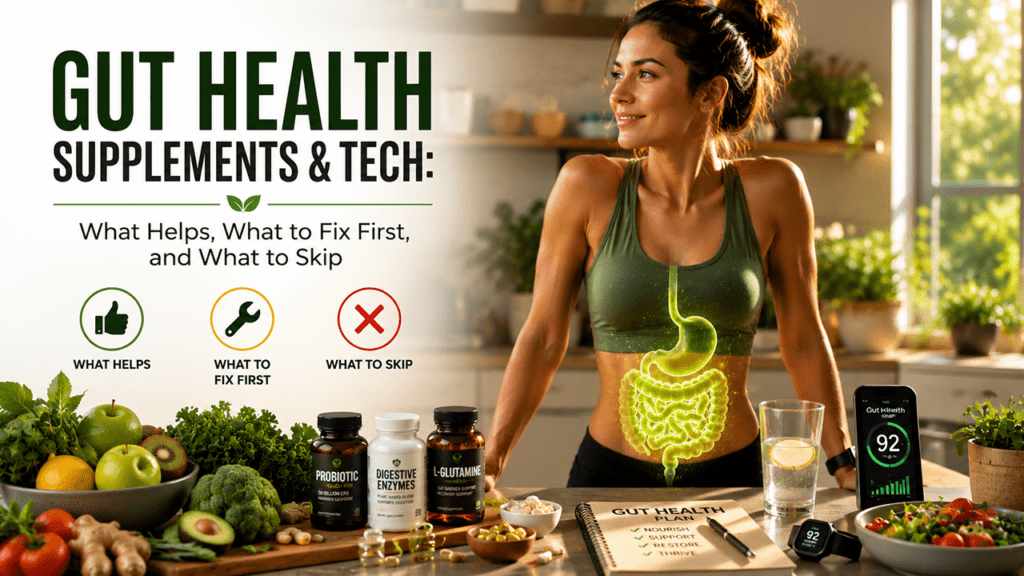
Most people can improve gut health significantly with a fiber‑rich, minimally processed diet, regular movement, quality sleep, and stress management before adding any supplements. Supplements and tech tools are most helpful when they target a specific need—such as post‑antibiotic support, known digestive insufficiency, or tracking hard‑to‑spot food triggers—rather than trying to “fix everything” at once.
Foundations Before Supplements
Food First: Feed the Microbiome
Harvard and other nutrition sources consistently emphasize that a dietary pattern rich in fiber from fruits, vegetables, whole grains, beans, nuts, and seeds is the safest and most powerful way to cultivate a healthy gut microbiome. These fibers act as prebiotics, feeding beneficial bacteria that help increase microbial diversity, support immune function, and improve bowel regularity.
Lifestyle Basics: Movement, Sleep, and Stress
Lifestyle factors like regular movement, adequate sleep, and stress management strongly influence digestion and the gut–brain axis. Poor sleep and chronic stress are linked to altered microbiome composition, increased inflammation, and more digestive symptoms. Gentle, consistent movement and nervous‑system‑calming practices make any supplement or tech intervention more effective over time.
Core Gut Health Supplement Categories

Probiotics: When Extra “Good Bugs” Help
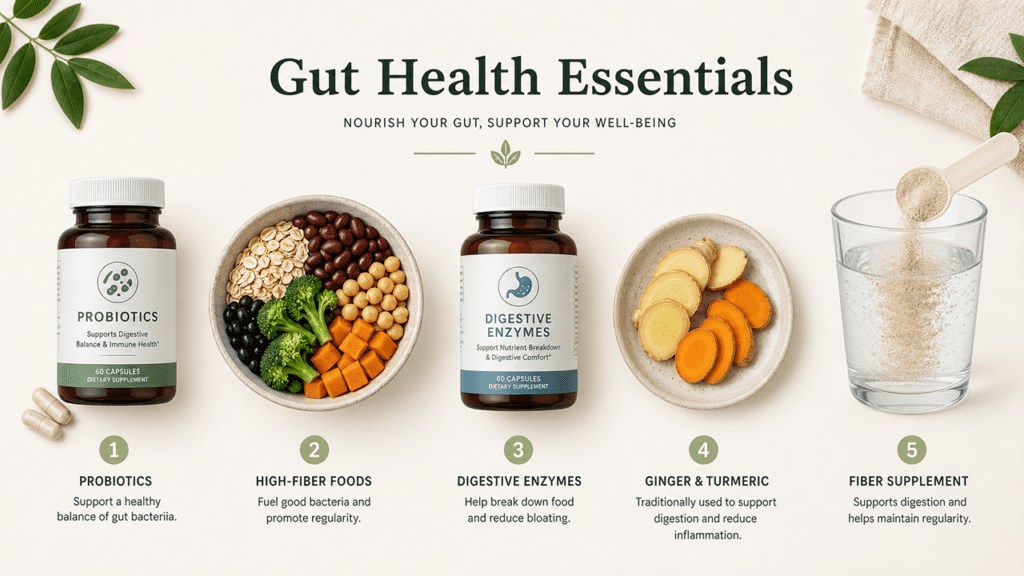
Probiotics are live microorganisms that may confer health benefits by supporting digestion, immunity, and microbial balance, especially when taken in adequate amounts. They are often useful after antibiotic courses or in certain IBS patterns, although benefits are strain‑specific and not everyone needs a daily probiotic pill. Many experts suggest a food‑first pattern with fermented foods and fibers, using supplements more selectively.
Prebiotic Fibers: Food for Friendly Microbes
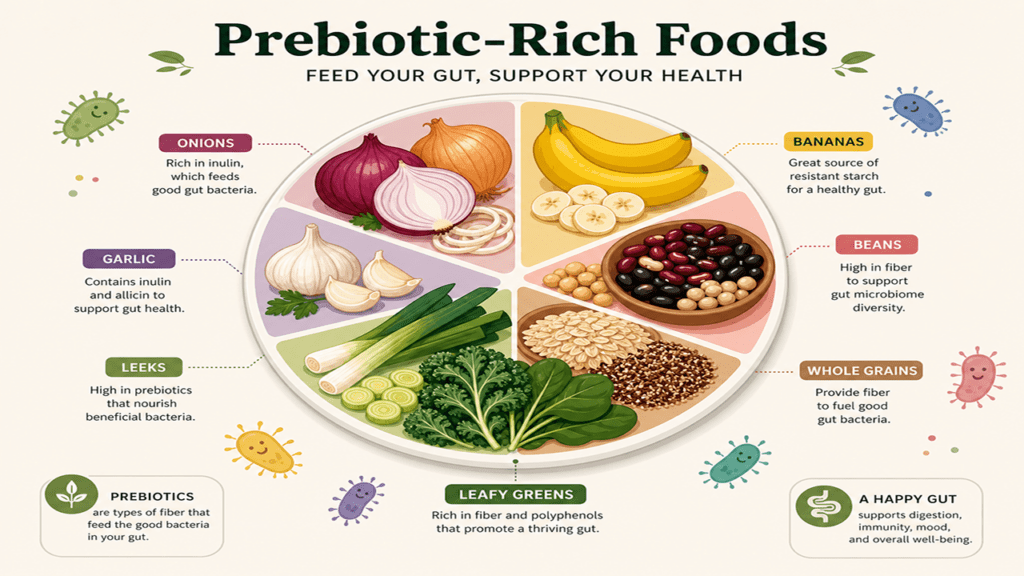
Prebiotics are non‑digestible fermentable carbohydrates (like inulin, FOS, GOS, and certain plant fibers) that feed beneficial bacteria in the colon. Clinical evidence shows that prebiotic supplementation consistently increases beneficial groups like Bifidobacterium and can improve bowel regularity, immune markers, and gut comfort. Prebiotic effects can also be achieved with food—wheat, onions, garlic, leeks, bananas, chicory root, and other fiber‑rich plants—introduced gradually to minimize gas and bloating.
Digestive Enzymes: Help for Breaking Down Food
Digestive enzyme supplements can help some people break down proteins, fats, and carbohydrates more efficiently, reducing post‑meal heaviness, gas, or reflux when digestive capacity is low. They are most clearly helpful in conditions where the body under‑produces enzymes, or for specific intolerances like lactose intolerance, and should be matched to the problem (e.g., lactase for dairy, lipase for fats). For generally healthy people with a balanced, fibrous diet, routine enzyme use may not be necessary.
L‑Glutamine and Gut-Lining Support
L‑glutamine is an amino acid often used in gut‑lining support protocols, especially in the “Repair” phase of 4R/5R frameworks. Some evidence suggests it can support intestinal barrier integrity and reduce permeability in specific clinical contexts, though research in otherwise healthy people is more limited. It is typically used short‑term and in combination with other nutrients like zinc, omega‑3s, and polyphenol‑rich foods.
Botanicals and Key Nutrients
Botanicals like ginger and turmeric/curcumin are frequently used for digestive comfort and their anti‑inflammatory properties. Nutrients such as soluble fiber blends, buffered minerals, and selected vitamins can support motility, acid–base balance, and microbial diversity when food alone is not enough or is difficult to optimize. Combining probiotics with fibers and enzymes often yields synergistic effects on digestion and microbiome resilience.
How to Choose Gut Supplements Safely
Start with the “Why” and Keep It Targeted
Before adding any gut supplement, it is important to be clear about your goal: easing post‑meal discomfort, supporting regularity, recovering after antibiotics, or working through a structured gut protocol. Evidence‑based guides stress using the right tool for the right job instead of taking many overlapping products “just in case.” When in doubt, starting with diet, simple fibers, and food‑based probiotics is safer than jumping straight into complex stacks.
Quality, Dosing, and Red Flags
Trusted sources recommend choosing products that are third‑party tested, clearly labeled with strains, CFUs or doses, and free from unnecessary fillers. “Miracle” cures for serious conditions, megadoses without evidence, or products that discourage medical care are all red flags. People who are pregnant, on multiple medications, or dealing with significant chronic illness should involve a healthcare professional before starting new supplements.
Gut-Focused Tech and Testing
Microbiome and Personalized Nutrition Tests
Consumer microbiome tests and personalized nutrition programs analyze stool or metabolic responses to suggest food patterns tailored to your microbiome. Research and expert commentary emphasize that while these tools can offer interesting insights, the core recommendation still looks like a diverse, fiber‑rich, minimally processed diet for most people. Test reports should be interpreted cautiously and ideally alongside symptoms and clinical judgment.
Apps and Trackers for Diet and Symptoms
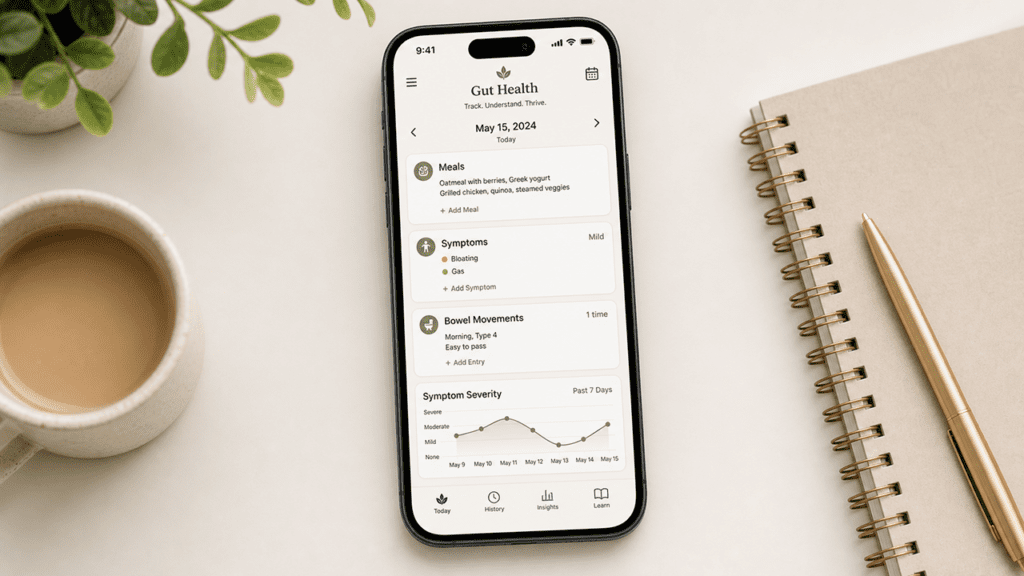
Several apps now help people track meals, symptoms, bowel habits, and gut “scores,” sometimes using AI to analyze food photos and patterns. These tools can reveal connections between specific foods, FODMAP loads, stress, sleep, and symptoms that are hard to see otherwise. They are especially useful during elimination and reintroduction phases or when working to identify IBS triggers.
Low-Tech Tracking Still Works
Even without specialized apps, simple meal and symptom logs—paper or digital, remain powerful for spotting patterns between what you eat, how you feel, and your bowel movements. Many clinicians recommend combining a basic journal with periodic check‑ins rather than relying solely on automated scores. The key is consistency and honest tracking, not perfection.
Emerging Trends in Gut Supplements & Tech
Next-Generation “Biotics” and Precision Formulas
Industry reports highlight a move beyond traditional probiotics toward multi‑ingredient formulations that combine prebiotics, probiotics, postbiotics, enzymes, and targeted nutrients. These products aim to support the gut ecosystem’s metabolic networks rather than just adding single strains. There is also growing interest in precision delivery systems that release probiotics and vitamins where they are most needed in the gut.
AI-Enhanced Coaching and Feedback
Newer apps and platforms use AI to score meals, correlate symptoms with foods, and provide personalized suggestions for diversifying the microbiome. For many people, this kind of feedback can make habit changes more engaging and concrete, especially during early gut recovery.
Local and Real-World Use: Supplements & Tech
Using Tools to Support, Not Replace, the Basics
Clinicians emphasize that in real life, supplements and tech should support, not replace, simple habits like eating mostly whole foods, staying hydrated, and moving regularly. In regions like Texas, that might look like pairing a basic probiotic and fiber supplement with locally available produce and using an app or journal to track how your favorite meals actually affect your gut. This balanced approach avoids both over‑supplementation and perfectionism.
FAQs Gut Health Supplements & Tech
What is the best supplement for gut health?
There is no single “best” supplement for everyone; the right choice depends on your goals and current habits. For many people, a combination of more dietary fiber, possibly a targeted probiotic, and sometimes digestive enzymes or a gentle fiber blend is more helpful than any one product alone.
Should I take probiotics every day?
Daily probiotics can be useful after antibiotics or in some IBS patterns, but they are not automatically necessary for everyone. Many experts recommend focusing on a long‑term, fiber‑rich diet and fermented foods first, then using specific probiotic strains when there is a clear reason to do so.
Do I need a microbiome test to fix my gut?
Most people do not need microbiome testing to start improving gut health with food, lifestyle, and basic supplements. Testing can be helpful in more complex or persistent cases, especially when guided by a practitioner who can translate results into a personalized plan.
Can apps and wearables really help my digestion?
Apps and trackers cannot fix digestion by themselves, but they can make it much easier to see which foods, stressors, and habits are linked to symptoms. Tools that log meals, symptoms, and bowel movements, and offer simple pattern reports, are particularly helpful during elimination diets or gut recovery protocols.
What should I talk to my doctor about before starting gut supplements?
Discuss any history of serious gut conditions, surgeries, autoimmune disease, pregnancy, or major medications (like blood thinners, immunosuppressants, or long‑term acid reducers) before starting new supplements. Your doctor or a knowledgeable practitioner can help you avoid interactions, choose appropriate products, and decide whether testing or a more structured protocol is warranted
Working with Practitioners
Functional and integrative practitioners often use a small, targeted set of supplements plus simple tracking tools as part of structured gut protocols. They may adjust products over time based on symptoms, labs, and lifestyle changes instead of locking patients into the same stack indefinitely. This kind of guided approach can be especially helpful in complex or long‑standing cases.