Healthy Gut Equals Healthy You
Our goal is to empower you with the information needed to make informed health decisions.
I have a special interest in wellness, which is using nutrition and exercise and lifestyle change, to prevent and prevent disease and to treat disease, and this is a favorite topic.
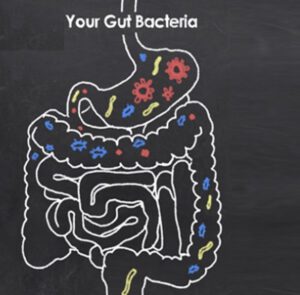
When we’re sitting at the dinner table, we’re sitting there and talking about I’m sitting there and talking about what the effect of what we’re eating on our gut bacteria. So I am mostly going to talk about gut bacteria and – and I’ll talk a little bit about bacteria in the rest of your body, but mostly I’m talking about your large intestine, which is where most of your bacteria is.
There is a growing body of research on not just your gut, but all of the bacteria and viruses and parasites that you carry in your body and your microbiome is all of those microbes that live on and in your body, and most, like, I said, are found In the intestine, actually, the term microbiome means the genes of those bacteria and microbiota means the actual bugs.
But I’m going to use microbiome throughout because that’s, how it’s typically used in most literature.
Now that we’ve got the Human Genome Project where we’re looking at human gene, and there are a couple of groups that are looking at this, there’s a huge human microbiome project and a huge American gut Project – and these involve many universities and the federal government – and these are huge projects and lots of information is coming over the next 5, 10, 15 years.

You have about 10 trillion cells in your human cells. You have a hundred trillion bacterial cells and viral cells. I’m, going to use bacteria, but it when I say that I’m including all the other things as well.
You have about 10 times as many microbial cells in your body as you do human cells and that whole mass of microbial cells adds up to about 3 pounds that’s about the same weight as your brain thereabouts.
We have 20,000 human genes, the if you look at the people. Next to you, we share the same genes with 99.9 percent of our fellow humans, so we may all look different, we may identify differently, but for the most part we are remarkably similar genetically.
So you’ve got 20,000 human genes in your body, you’ve, got 20 million microbial genes and from person to person we only share about 10 % of that microbial DNA, so any two people will have 10 % of the same Microbes and about 90 % will be different, so there’s, much more diversity and a much larger number of genes in our microbial population than in our population of human cells.
So, really we’re just like vehicles for this microbial universe and and the the universe is very complex, and we’re just starting to learn the makeup of some of those microbes. We are born with no bacteria, there’s, no bacteria in the uterus, and we are colonized very quickly at birth.
If you’re born by vaginal delivery, you’re colonized by different bacteria than if you’re born by cesarean. If you’re born by cesarean, you’re, mostly colonized with skin bacteria. And if you look long-term at children born by cesarean versus vaginal delivery, they have a higher rate of asthma and allergy of autoimmune disease such as lupus and rheumatoid arthritis and more frequent ear infections and a higher rate of obesity.
So, if you’re born by cesarean, you have a higher rate of all these conditions. There have been kind of this. There have been very limited studies and there’s, a pretty busy hippie dippie practice of taking a q-tip and swabbing vechta vaginal bacteria and then swabbing it on the nose and mouth of your newborn.
If your child’s born by cesarean so far, there’s, no data that that colonizes the baby with vaginal bacteria and reduces the risk of these conditions. You also get most of your bacterial ex. You know you, you create your your bacterial environment, mostly in that first two years of life, and if you’re exposed to a lot of bacteria, you have a more complex, more diverse microbiome so and that’s associated with lower rates Of asthma and fewer allergies, so farm kids have fewer allergies than city kids, and you know my sister’s.
Mother-In-Law used to say that you, don’t, get normal brain development unless you eat a pound of dirt by your first birthday, and there is some evidence to support that that playing in the dirt is good for your microbiome.
We know that there are other conditions that have different microbiome autistic children have a different biome than than more neurotypical children. We don’t know whether the abnormal bacteria increases the risk of autistic behavior or whether there’s, something about being autistic.
That alters your gut bacteria. It’s, kind of a chicken or egg thing. We know that there’s a link, but there’s. No evidence of cause causation either way. We just don’t know I’m gonna touch briefly on non colon microbes, your hand.
Bacteria are as individual to you as a fingerprint and no amount of hand-washing completely eliminates them, and your left and right hand have completely different microbial pep microbial environments, and they did this by swabbing keyboards and the spacer bar kind of blends from you know left hand To right hand and the other fingers are very distinct.
You wonder how they get like grants for this right. There’s, some evidence that mosquito preference is possibly due to hand and foot skin bacteria and that mosquitoes like certain bacteria, more than others, and there is very early days, research to see if this can be used as a malaria treatment as a malaria Prevention to do something that will alter the bacteria on your hands to a more favorable, anti-malarial profile and again early days.
If you consume more sugar and simple carbohydrates, we all know that we get more cavities right, that’s from strep mutants. That’s, the bacteria that’s most associated with dental caries, with cavities, and most oral bacteria, though, are healthy.
They actually keep your mouth and balance. They help prevent cavities. So there’s. A growing push in in dental health, away from alcohol-based mouth washes, which kill off all your normal, healthy bacteria that should be there and toward just flossing and mechanical removal of bacteria and for non alcohol-based.
The mouthwash that does not kill off your good back bacteria smokers have different got bacteria again, we don’t, know cause or effect h pylori. This was radical h. Pylori is a bacteria that is associated with stomach ulcers now for years.
We all believe that stomach ulcers were caused by stress. It was caused by too much stomach acid. It was caused by having a type A personality and when the first researcher, to isolate this bacteria that grows in that acidic stomach environment first postulated that this was related to stomach ulcers.
No one believed him because it just went against everything we had ever known about stomach ulcers and believed about stomach ulcers, so he won the Nobel Prize for this discovery by experimenting on himself.
He had no h pylori in his stomach. He drank a big vial of h, pylori infected his stomach had endoscopy that confirmed. He had a stomach. Ulcer then took antibiotics, eradicated. The h, pylori and his ulcer went away and he won the Nobel Prize for that, because the I this, like, I said, was a completely radical idea.
That is not the entire story. Half of us have h, pylori in our stomachs and half of us. Obviously, don’t have stomach ulcers, so it is the presence of h, pylori, plus something else that gives you gastritis and stomach ulcers in all of that, but it has become standard in people who have you know gastritis.
That just is difficult to treat to evaluate them for h, pylori and treat them if, if it is found gut bacteria live mostly in the large intestine. We have very small numbers in the small intestine. I’m gonna address that, with my next slide, we all have heard of E coli.
We all know that that’s gut bacteria. That is just because it’s, the easiest to grow in the lab and in fact it’s, the bacteria most studied in research trials and that sort of thing, because it is so easy to grow.
However, it actually accounts for only 1 % of gut bacteria. Most of the the microbes that live in our intestine cannot be grown in the lab, and the reason that this has exploded only recently. This research is because you need a DNA gene sequencing to be able to do it so the same kind of complex chopped, up lots of cells and look for little sequences of DNA that takes massive computer power, the same kind of thing: that’s.
Being done with a human genome project that is now being done for the gut microbiome, because most of these things we can’t grow, so they we are identifying them by their DNA. Most nutrients are absorbed in the small, intestine and most water is absorbed in the large intestine.
The microbes in the large intestine ferment fiber, which is not absorbed and their major product that they produce, is short chain fatty acids, and these have a healing and therapeutic effect on the gut.
When you don’t have enough fiber you don’t have enough of those fatty acids. Then you can get. What’s called leaky gut the you get little gaps between the cells and and you don’t, get that barrier between your intestines and the rest of your body.
The gut bacteria of different populations is different in the US and Europe. It is mostly Bacteroides that’s associated with a higher meat, higher fat diet in populations that eat a lot of grains, a lot of vegetables and our vegetarian, you will see more Firmicutes.
You don’t have to remember those names. You will not be tested on this. I just want to say that there’s, different populations of in in in different groups, and we at this point don’t know what is the ideal gut bacterial population? We know that runners and athletes look different than the rest of us.
We know that vegetarians who eat a whole food diet, look different than vegetarians who eat McDonald’s and drink coke all day, and we don’t know really. Yet what’s, an ideal bacterial composition? We also know that people who have ulcerative colitis people who have crohn’s.
Disease have different bacteria. We do not know whether it’s, their underlying bowel disorder that causes the at the shift or whether the shift causes them to have inflammatory bowel disease. So are you getting the sense that we know very little about this? This is all you know.
We’re, just learning. I’m gonna briefly talk about SIBO. I just put this slide in because I’m hearing more about it from my patients that is overgrowth of bacteria in the small intestine. Normally, there are only small numbers of bacteria, and this in the small, intestine and SIBO is when the normal bacteria that live in the colon end up in the small, intestine and the symptoms are typically constipation gas, bloating, sometimes diarrhea, but more often constipation.
There are several things that predispose you to SIBO anything that slows transit that gives you reduced. Motility will increase the risk of things kind of backing up and bacteria tracking up, instead of out the way they should, and so, if you’ve got abnormal Anatomy.
If you’ve had a ruin. Why gastroplasty, where your stomach has been stapled and reroute it? If you have diabetes some people with diabetes, especially if they’ve, had it for a long time have slowed motility things move through more slowly.
If you’ve got if you’ve had prior abdominal surgery, and you have scar tissue things may move through more more slowly. Some medications can can cause that as well such as narcotics and you’re more prone to SIBO.
If you’ve been on one of the proton pump inhibitors, because it seems to be that that suppression of acid production in the stomach affects the you know downstream, the small intestine. So if you’ve been on prevacid protonix prilosec, that class of drugs, your risk, especially if you’ve, been short-term, is not going to increase your risk, but if you are taking it long-term, especially if you were taking it for months or years at a time, if that increases your risk of SIBO, There’s, an antibiotic that’s, hideously expensive, that has been FDA approved for irritable, bowel syndrome with diarrhea.
It also works well for SIBO, but it’s, not FDA approved for that, so sometimes getting insurance coverage. For that can be problematic, like I said, allergies and asthma are, are clearly related to especially childhood exposure.
If you have a dog, when you’re an infant, you have a reduced risk of asthma and eczema. But if you get your first dog when you’re a teenager, you have an increased risk of those things. So there’s a window to be exposed to these things.
So you want to let your toddler’s play in the dirt and let them let the dog lick their face and all those things it’s good for your kids, because and having siblings, also reduces your risk. If you have older siblings, your risk of Allergy and Asthma is lower so having pets, siblings and living in outdoor life.
All reduce your risk for for these illnesses and it is thought because all of those things increase the diversity, the you know, the variety of your gut and your skin microbes. This is what I find the most fascinating.
If you take bacteria free mice and take twins, one of whom is obese and one of whom is lean and you take – and you do a fecal transplant from those twins into these mice and you feed both mice, the identical low-fat high-fiber diet.
This is what you get the the mouse that is exposed to the fecal bacteria of the of the obese twin becomes obese, and the mouse that is exposed to the leaner twin remains lean. This is fascinating. Some mice are genetically prone to obesity and when you give their fecal material to normal weight, genetically normal mice, the normal mice have a shift in gut bacteria toward that scene in in typically obese mice, and they also get fat.
We know that metabolic syndrome, which is having a high rate of you, know an increased risk for obesity, hypertension, carrying your weight centrally through the middle. We call that metabolic syndrome, it is associated with a higher rate of Bacteroides and other bacteria that we see in these obese rodents, but so far nobody has done fecal transplants in humans to try to make us thinner.
There is one approved use of fecal transplants. There’s, a severe bacterial infection called Clostridium, difficile c-diff and it causes intractable diarrhea and it is difficult to treat with antibiotics and so for people who are unresponsive to antibiotics and have have severe diarrhea from seed.
If you can actually do human fecal transplants and it instantly well, it’s like a miracle, resolves the diarrhea in people who’ve had months of diarrhea. So I like this. So do you think that’s contagious? Of course, we think of course not, but you know – maybe maybe I think this is really interesting.
Mice that are fed sucralose or saccharin become diabetic mice. They’re fed sugar, do not become diabetic. Five days of saccharin given to people shifted their blood tests into the pre-diabetic range. They took people who had completely normal blood sugar and and gave them saccharine for five days and they shifted into the pre-diabetic range, because we have known for many years that people who drink diet soda have the exact same rate of obesity and diabetes as people who Drink sugar soda, which makes no sense at all because you know if you’re, consuming more calories, more sugar.
Why should you not? Why should you gain weight? Why should you become diabetic, and this may be the reason that you are more likely to become diabetic if you consume artificial sweeteners and, interestingly, the only people who developed pre-diabetes were the people who had a shift in their gut bacteria.
If you did not have a shift in your gut bacteria, you did not become pre-diabetic, and this is a very small study. I mean very small and it’s. One of the few studies that has been done on humans and most of the data that I’ve talked about is rat data altered immunity.
A short-term high-fat diet given to mice increases their susceptibility to infection, and we know that human beings are more likely to have autoimmune disease if they have a less desert, diverse gut bacteria.
So if you have Crohn’s, ulcerative colitis rumba, arthritis, MS all of these autoimmune disorders, not all of which are gut disorders, we know that your gut bacteria show fewer different species when your disease is in remission.
When your rheumatoid arthritis gets better, your gut shows more species, you have a more diverse microbiome. We also see more bacteria that we think are bad bacteria in people who have autoimmune disease actin, imai C’s, strep cluster idiom.
We see more of that in people who have autoimmune disease than we see in the general population. We see more Bifidobacterium with ulcerative colitis, so the probiotics or yogurt could actually make it worse, because bifidobacteria and lactobacilli are the main bacteria that are in yogurt and and probiotic supplements, and are they in those things because they have been proven to help with you know, Gi health – maybe a modest effect for for those things for people who have constipation there is very little data for anything else.
I’ll talk about that later. Smokers have more stomach ulcers, more inflammatory, bowel disease and more gastrointestinal cancers, and that reduction in bowel diversity may be. Why just one more reason not to smoke if you didn’t need another reason: cancer in the gut gut bacteria differ in breast cancer.
Patients from women who do not have breast cancer, but that is only true of postmenopausal breast cancer. There are no significant differences in premenopausal best breast cancer. This may be due to a bacterial shift that promotes a higher level of estrogen in postmenopausal women who have breast cancer, and we know there’s at least some suggestion that a high-fat, high meat diet is associated with breast cancer.
That may be because if you load your stomach up with high fat, you produce more bile acids, and some of that is converted in the gut to estrogen. It also may be due to bacterial shifts that promote inflammation and alter your immunity.
We really don’t know, and we don’t know that there’s, a cause that have effect. We just know that the bacteria of postmenopausal breast cancer patients is different. So is it the breast cancer that alters your bacteria bacteria, or is it the bacteria that impacts your effective breast cancer? We think it goes that direction.
We don’t know for sure. Colon cancer is also associated with a high meat, high-fat, diet and again that may be that bile acid effect in the EU. The European Union vegans have almost the same gut bacteria as non vegans and it’s thought to be because they eat a very high fat, very high protein diet.
It’s only when you are eating a very high fiber, low low fat diet that you see that favorable gut shift. If you have diverse microbiome, you respond better to immunotherapy. So you know Jimmy Carter, who has metastatic melanoma, was given immunity.
His tumor shrank to almost nothing to undetectable and your response to that kind of treatment is greater. If you have healthier gut bacteria and there’s, MD Anderson has done melanoma studies where they correlated response to treatment with dietary fiber gut feeling.
We all say that right and there there’s, evidence that this may be true. You can take a timid and anxious Mouse and expose it to the fecal material of a bold and adventurous Mouse and change its behavior, and vice versa.
You can make a bold Mouse, timid and if you get a depressed Mouse you can take the fecal material of and make and give it to another Mouse and make that Mouse depressed. Now you wonder: how do you measure depression in a mouse right? You’re, not having them, lay on a couch and talk about their personal issues and their relationships with their mothers right.
The way they measure depression in mice is how long they’ll do something that’s futile. So if they’re in a bowl swimming around and there’s, no exit to get out the walls are slippery, they can ‘
T can’t can’t get out. They measure how long before the mouse gives up, and so if the mouse gives up quickly, they consider that Mouse to be depressed. And if you give antidepressants like prozac and zoloft to the mice, they’ll swim longer.
Oh no right and we know that food impacts mood and it ‘ S thought to be largely a serotonin affect you, know the Prozac and Zoloft to boost the amount of serotonin in your brain. 90 % of the serotonin in your body comes from your gut bacteria.
It is not made in the rest of your body in substantial amounts. It is your gut bacteria that are making your Cilla serotonin, and we know that food has an impact on mood, but there’s growing evidence that it may be a bacterial effect cookies and cake.
Make you feel better in the moment, but you feel worse several hours later and you have mild depressive symptoms for about two days afterwards and the, and I would have thought yeah, but one of my girlfriend’s gave me, you know her homemade candy, That she makes – and I binge dit and sure enough – I really did feel kind of depressed the next two days and because I just read that study and I thought well, I’m – not really buying that, and maybe that was a placebo effect on My part, because I was paying attention to that and there’s, one small MRI study where they gave people probiotics and did functional MRI on them and you know, showed them pictures and things like that, and people had less reactivity.
They they were less traumatized and upset by frightening or alarming pictures, so it sort of calmed. It seemed to have a calming effect to take the probiotics and there’s, even smaller studies, to suggest that if probiotics may be beneficial for mild depression, mild depression.
But I’m, going to talk about probiotics later and I’ll. Give you my take on probiotics. So there’s, as as this information has exploded, it is spread out into you, know, out out from the medical literature and out into literature of available for the general population, and there are dozens, dozens of diet books on how to change your microbiome.
Dozens, none of them have any science behind them. They are theoretically reasons that should improve your gut bacteria, but there is the science is not there. There’s very little human data on diet. It’s.
No surprise that you know french fries are bad and yogurt, because it has natural probiotics may be as good and may be. Nuts, maybe a few other things like that. Bifidobacteria and lactobacilli, like I said, are found in yogurt and kefir and that sort of thing and they are both lower in the guts of obese people and both of these seem to lower inflammation, improve improve your short chain fatty acids like I talked about before, and So maybe getting I’m sort of a fan of not taking pills for things that you should just eat real food, and so, if you’re going to do something to you know impact your microbiome.
I’ll. Talk about fiber and that sort of thing, but do it with yogurt and kefir, and things like that, where you’re not going to overdose on bacteria that is going to you know, cause an adverse shift. Speaking of how rapid this happens, if you eat basically meat and cheese for five days, you get rapid weight loss.
I mean we know that with the Atkins diet right and you also get a rapid shift to adverse gut bacteria. Sadly, five days of a whole food, vegan diet cause this just a little bit of change and you probably need long-term change, dietary change to shift to more favourable bacteria.
So it’s very easy and very fast to shift your bacteria in an adverse direction and takes a lot longer and it’s harder to shift in a more favorable direction. And I just did my colonoscopy, which everybody should be doing.
If you haven’t, if you’re, not up to date with your colonoscopy and I did a three-day low, fiber diet, which was you know, meat and cheese and bread, oh, I felt terrible and – and I’m sure, My gut bacteria, we’re, not happy, but my mood was certainly not.
I felt lethargic I felt kind of depressed and and as soon as I went back to my normal diet, I felt fine. So I’m, a believer that this is a rapid shift. Should you be taking probiotics, because all of this sounds fabulous like if you could shift your bacteria in a favorable direction.
You could, you know, treat your obesity and your diabetes and everything else, but there are no fda-approved medical claims for probiotics and the definition of a probiotic is live. Bacteria given for some health benefit, like I said it’s.
Typically, what grows easily supplements in this country are regulated as food, not as drugs. So if you’re taking a prescription drug, it has to contain what it says it contains not contain any kind of adulterants and it has to be within some narrow range.
Typically, it contains between 95 percent and 105 percent of what it states that it does so that’s. What you get if you’ve got a prescription. Drug supplements, on the other hand, are regulated as food.
They only have to be proven, not toxic, and they’re not supposed to have adulterants in them. Although they oftentimes do, they do not have to contain what they say they do. They do not have to contain the amount that they say they do and if you go to supplement manufacturing facilities, they’re there periodically inspected, but not as often as as drug manufacturers, 70 percent of them failed.
The inspection and a third of what you buy as supplements have no active ingredient. No none. So in Europe, supplements are regulated like drugs, and so you get that same kind of quality control that they have for their drug population.
So in Europe, doctors are more likely to recommend supplements more likely to prescribe it and the populations more likely to be taking supplements, but in this country the regulation is a little looser, so it’s kind of a buyer.
Beware thing so there does not have to be any proven benefit to probiotics, and they do not have to prove that they have the number of bacteria that they claim that they have. The bacteria live in your gut after you take them for just two or three days.
So, if you want to continue to have a beneficial effect, you have to continue taking them. You need billions of bacteria to have a to effect. A significant change in your gut bacteria yogurt typically has millions, and your gut actually has trillions of bacteria.
So, even if you’re taking billions, you’re still only having a small effect on that overall bacteria they are potentially harmful. If you are immune compromised, if you’re elderly or very young, I mean definitely, these should not be given to babies and toddlers or if you are severely ill, then you can actually contract an infection from bacteria that are normally happily in the gut And are harmless, but you can get severely ill if you already are predisposed to becoming ill and, like I said, with ulcerative colitis, you’ve got more Bifidobacterium and so yogurt and probiotics might actually make it worse.
There is some data, though, for irritable, bowel symptoms that it makes it better. The one time I recommend probiotics for my patients is, after a course of antibiotics, because the antibiotics have kind of wiped out your normal bacteria, and, and this may help repopulate and like I said if you have irritable bowel symptoms, particularly if you have constipation as your Ibs symptom, maybe it helps and, like I said, maybe mood, but what I really recommend for my patients rather than take probiotics, because I feel, like the probiotics, take the risk that you’re mucking around with the balance of your gut is to take Probiotics and that a prebiotic is a food that is, that contains fiber, that’s, not absorbed, and so your body doesn’t absorb it.
It actually has no nutritional effect for you for that fiber. That fiber is feeding you’re good, but gut bacteria, that’s. What your gut bacteria is eating, and so, if you’ve got more fiber. You get that favorable shift.
In gut bacteria, you get more of the anti inflammatory compounds like the short chain fatty acids and you get sort of nourishment of the bowel wall and serotonin production and all of these other effects that we’ve been talking about, and this is the Most important lesson of the day, because it is the one way that you can alter your gut, my microbiome for the long-term, because you can alter it for the short-term by taking probiotics by taking antibiotics by taking all those things.
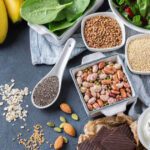
But this is the one thing you can do that really long-term will shift your gut bacteria in the favorable range and what contains fiber it’s, pretty straightforward, more beans and lentil, more veggies, more fruit, garlic and onions are good.
Your gut bacteria loves garlic and onions, there are prebiotic supplements and there’s, not much data to support those, although sometimes if you have constipation taking a fiber supplement, can be helpful.
It also may help with Crohn’s. Disease and may be insulin, resistance and pre-diabetes. This is what you want to avoid. Antibiotics. Large doses of antibiotics kill bacteria that’s. Why we typically take it if we’ve got a bacterial infection, but low doses given chronically allow bacteria to become resistant, and so we are always worried that if we’re, giving people frequent courses of antibiotics or a prolonged courses of Antibiotics that the bacteria will mutate and become resistant to those antibiotics, even if you never take an antibiotic, if you are not vegan, you are exposed to a lot of antibiotics.
70 % of antibiotic use in this country is meat, dairy products and and it is used to fatten livestock in the US, and so it has been illegal in the European Union to use antibiotics to fatten livestock since 2006.
But Americans, the the FDA, has prioritized cheap food over quality food Europeans pay more for their food, but they have a safer food supply. They’re, not exposed to antibiotics in their meat. It’s illegal to sell chicken and eggs that contain salmonella.
That’s, not illegal in this country. It’s. Why? It’s? Why you need to cook chicken and eggs thoroughly, because almost all of the commercial, chicken and eggs are contaminated with salmonella in this country? And and we do have a cheaper food supply? We do have ready availability for food, and but we and we spend less money on food than other countries, because the FDA has prioritized inexpensive food.
There are some sometimes that you absolutely need to take antibiotics, but most illnesses that are traditionally treated with antibiotics. Actually, don’t need antibiotics most of the time you know. If you’ve got a cold or flu.
Those are viral illnesses. You do not need antibiotics, even if you have sinusitis, which is a common reason to get antibiotics or otitis and infection in the ears. Most of those don’t need antibiotics either and most of those will get better on their own.
Even cystitis bladder infections will sometimes get better without antibiotics. Children and adults who receive antibiotics are more likely to become obese, especially if they are given antibiotics at particularly frequent antibiotics in their first 6 months.
They also have a higher rate of Allergy and Asthma. That may be because of alteration of the gut bacteria and the rate of antibiotics in the population correlates with obesity. Is it that being obese predisposes you to getting infections? Is it that getting infections of being treated with antibiotics? Predisposes you to obesity, or are they just unrelated facts, but the map of obesity and antibiotic exposure matches pretty closely from in a population-based study? Now, obviously, that’s, not true on an individual level.
It’s, not like every person who takes an antibiotic it’s. Gon na suddenly become fat, but if you look at antibiotic use in the general population and the rate of obesity in the population for those states, there is a correlation.
This is the future that I hope the I I think that five ten fifteen years from now, we will have, I hope, targeted, fda-approved, Pro and prebiotics for mood disorders, autoimmune, disease, irritable, bowel disease, an inflammatory bowel disease.
Fecal transplants are currently used, as I said, to treat c-diff in lab rats. It can reverse obesity and is that the wave of the future for human trials – and I think it probably will be vaccines – could be targeted for bacteria that are associated with cardiovascular disease cancer.
We already have two vaccines for cancer, the hepatitis B vaccine and the HPV vaccine. Both reduce the rate of cancer in the population. We may be able to come up with vaccines that will treat some of these disorders.
As I’ve said there’s very little human data. This is mostly we are starting to just study the micro biomes of different populations. This is technology that is only recently available because of gene sequencing and most of the data.
Most of the studies on altering your gut microbiome have been done on rats, and so this is very promising, but I do not recommend that you go out and just start taking probiotics and it’s. A little late for most of us to play in the dirt and alter our immunity.
Maybe we can, but you know the best way to shift your gut. Bacteria is what you should do anyway, for your risk of cancer and cardiovascular disease, for your mood for your energy, for your sense of well-being is to eat more fruits and vegetables, and I’m, not saying, never eat meat.