Immune Benefits of Vitamin C
Let’s talk about the immune benefits of vitamin C. Now vitamin C does a lot of different things, but its influence on your immune system is quite amazing. Also just to let you know Vitamin C deficiencies are actually very common.
You can have what’s called a subclinical vitamin C deficiency where you’re not majorly deficient, but you’re just deficient enough to cause a weakness within the immune system.
Vitamin C a Powerful Antioxidant
Vitamin C is a water-soluble nutrient, so it has a low storage capacity. So unless you’re constantly getting vitamin C, you can be deficient within weeks. Vitamin C is a very powerful antioxidant. So when you have free radicals, which are basically molecules with unpaired electrons, so you’re supposed to have two to balance.
Without let’s say you just have one and it becomes a free radical, so it can damage certain things in the body. Vitamin C comes in there and donates an electron to stabilize the molecule, so it can actually help counter free, radical damage.
Immune Benefits
All right, number one: as far as immune benefits it can enhance antibodies. Antibodies, are proteins that fight pathogens, microbes that shouldn’t, be in your body. Number two: Also it will increase neutrophil motility neutrophils are a type of white blood cell.
It’s like a phagocyte that cleans things up. It engulfs and kills certain microbes, and it speeds up the motility of these little guys right here, number three: it enhances your B cells or B lymphocytes.
It’s, a type of white blood cell, which then increases antibodies. We’ve already mentioned that right here, number four: it enhances the t-cells another type of lymphocyte that helps you fight off infection.
Number five: it can increase interferon now interferon is a hormone that kills infected cells and their surrounding neighbors. So it is a very powerful, a new compound that our bodies make. So you can see one big benefit of vitamin C.
Is it helps fight infection? Now, when your deficient in vitamin C, if you’re very deficient, you have scurvy, but I think there’s different levels of scurvy, so there could be subclinical versions of this or major versions.
Vitamin C Deficiencies

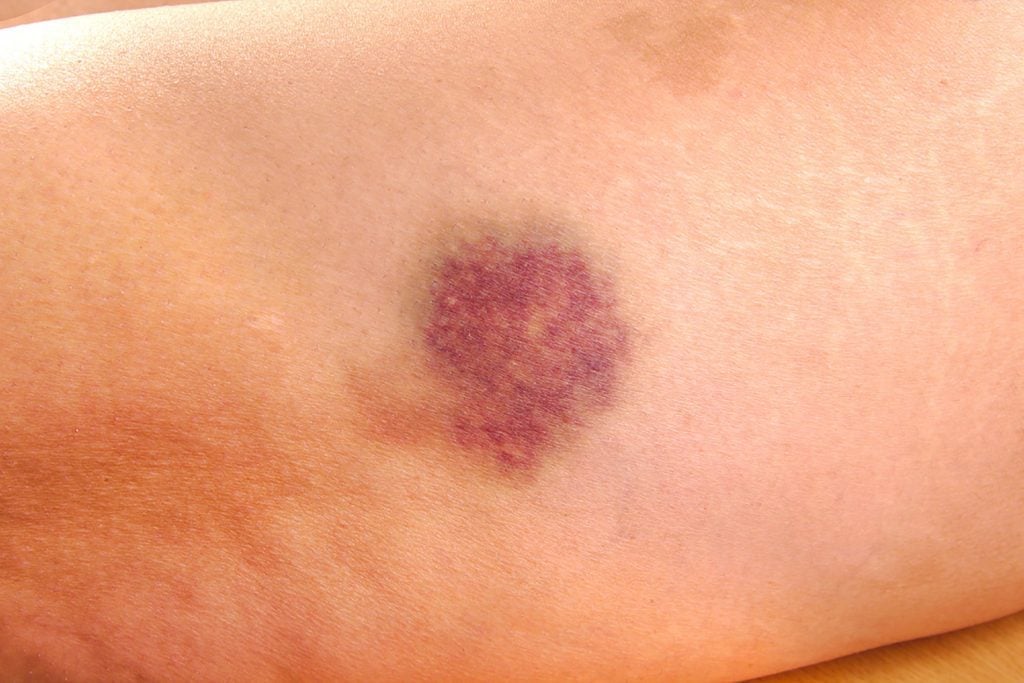
When small blood vessels right under the surface of your skin burst, you end up with a bruise. If you bruise easily, it could be a sign that your blood vessel walls—which are made largely from collagen—are weak. Vitamin C helps strengthen your blood vessels by boosting collagen production so they don’t breakdown as easily. Also, you’re not going to probably see a full-blown scurvy case, but the point I want to bring up about vitamin C deficiencies, especially scurvy, which is the major vitamin C deficiency, is that it makes you susceptible to certain infections with scurvy.
It has the ability to increase susceptibility to fatal infections. Like pneumonia. Scurvy is often followed by infectious epidemics. What does that mean? It means that when you have an infection, they can actually develop scurvy.
Why is that? Because infections increase the need for vitamin C, your white blood cells accumulate vitamin C. They need the vitamin C to function. So if you’re using your immune system more, you’re, going to deplete your vitamin C reserves, especially if you’re, not putting it back.
So this is another way that someone could be deficient number one. They’re, not consuming enough in their diet, number two to get infection, it puts stress on the immune system and that’s. Another way that you can be deficient minimally, 200 milligrams per day.
Good Sources of Vitamin C
A good source of vitamin C would be sauerkraut. Leafy greens bell peppers any of the spicy hot peppers. Jalapenos red peppers are really high in vitamin C. Now, if you’re gonna take a supplement. Make sure that you take a whole food base.
Complex vitamin C, not a synthetic. The synthetic version of vitamin C is called ascorbic acid and one of the ways they make it is they combine cornstarch and sulfuric acid. So sometimes people tell you that the synthetic version is the same as a natural.
There’s, no difference, but I have a hard time believing that sulfuric, acid and cornstarch is the same, is something from actual food and if you haven’t seen my other video on vitamin C. I put it up right here, check it out, let’s.
Talk about the immune benefits of vitamin C. Now vitamin C does a lot of different things, but its influence on your immune system is quite amazing. Let’s. Talk about it! Now vitamin C deficiencies are actually very common.
You can have what’s called a subclinical vitamin C deficiency where you’re, not majorly deficient, but you’re, just efficient enough to cause a weakness within the immune system. I’m, going to talk more about that.
Vitamin C is a water-soluble nutrient, so it has a low storage capacity. So unless you’re constantly getting vitamin C, you can be deficient within weeks. Vitamin C is a very powerful antioxidant. So when you have free radicals, which are basically molecules with unpaired electrons, so you’re supposed to have two to balance.
Without let’s say you just have one and it becomes a free radical, so it can damage certain things in the body. Vitamin C comes in there and donates an electron to stabilize the molecule, so it can actually help counter free, radical damage.
All right, as far as immune benefits it can enhance antibodies. Antibodies, are proteins that fight pathogens, microbes that shouldn’t, be in your body. Also it will increase neutrophil motility neutrophils are a type of white blood cell.
It’s like a phagocyte that cleans things up. It engulfs and kills certain microbes, and it speeds up the motility of these little guys right here, number three: it enhances your B cells or B lymphocytes.
It’s, a type of white blood cell, which then increases antibodies. We’ve already mentioned that right here there were four: it enhances the t-cells another type of lymphocyte that helps you fight off infection number five.
It can increase interferon now. Interferon is a hormone that kills infected cells and their surrounding neighbors. So it is a very powerful, a new compound that our bodies make. So you can see one big benefit of vitamins.
Is it helps fight infection. Now, when your deficient in vitamin C, if you’re very deficient, you have scurvy, but I think there’s different levels of scurvy, so there could be subclinical versions of this or major versions.
You’re, not going to probably see a full-blown scurvy case, but the point I want to bring up about vitamin C deficiencies, especially scurvy, which is the major vitamin C deficiency, is that it makes you susceptible to certain infections with scurvy.
It has the ability to increase Sept ability to fatal infections. Like pneumonia. Scurvy is often followed by infectious epidemics. What does that mean? It means that when you have an infection, they can actually develop scurvy.
Why is that? Because infections increase the need for vitamin C, your white blood cells accumulate vitamin C. They need the vitamin C to function. So if you’re using your immune system more, you’re, going to deplete your vitamin C reserves, especially if you’re, not putting it back.
So this is another way that someone could be deficient number one. They’re, not consuming enough in their diet, number two to get infection, it puts stress on the immune system and that’s. Another way that you can be deficient minimally, 200 milligrams per day.
A good source of vitamin C would be sauerkraut. Leafy greens bell peppers any of the spicy hot peppers. Jalapenos red peppers are really high in vitamin C. Now, if you’re gonna take a supplement. Make sure that you take a whole food base.
Complex vitamin C, not a synthetic. The synthetic version of vitamin C is called the score pack acid and one of the ways they make it is they combine cornstarch and sulfuric acid. So sometimes people tell you that the synthetic version is the same as a natural.